Canada has been able to attract skilled workers, families, entrepreneurs and other newcomers who are interested in long term opportunities. Nonetheless, it is not as simple as filling out a form to become a permanent resident. To be successful in the process, applicants need to find the appropriate immigration pathway, qualify, compile supporting documents and adhere to the application procedure.
5 Key Takeaways
- Choose the Canadian immigration pathway that best matches your qualifications and long-term goals.
- Prepare language, education, work experience, financial and identity documents before applying.
- Express Entry candidates need an Invitation to Apply before submitting their PR application.
- Accuracy and completeness are essential to avoid application delays, refusals or unnecessary complications.
- Professional Canada immigration services can help applicants understand requirements and manage complex application steps.
Regardless of which route you intend to use Express Entry, a Provincial Nominee Program (PNP), family sponsorship or otherwise, being familiar with all the steps may allow you to make your way through the process a little bit more manageable. This guide outlines the main steps that you need to follow in case you want to apply for permanent residency Canada, and where professional advice can be beneficial.
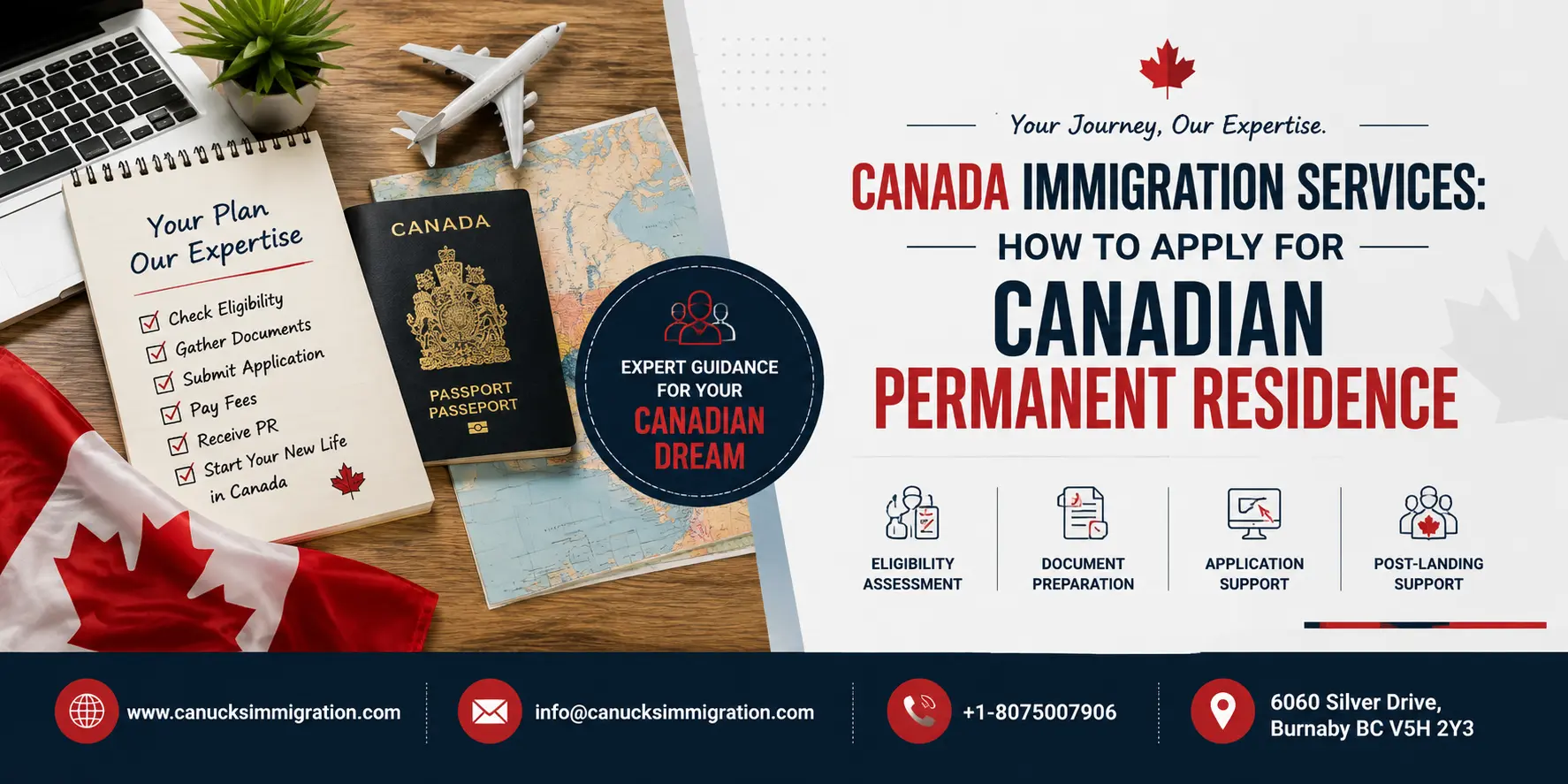
From Eligibility to PR Status- Steps to Apply for Permanent Residence in Canada
Step 1: Choose the Right Immigration Pathway
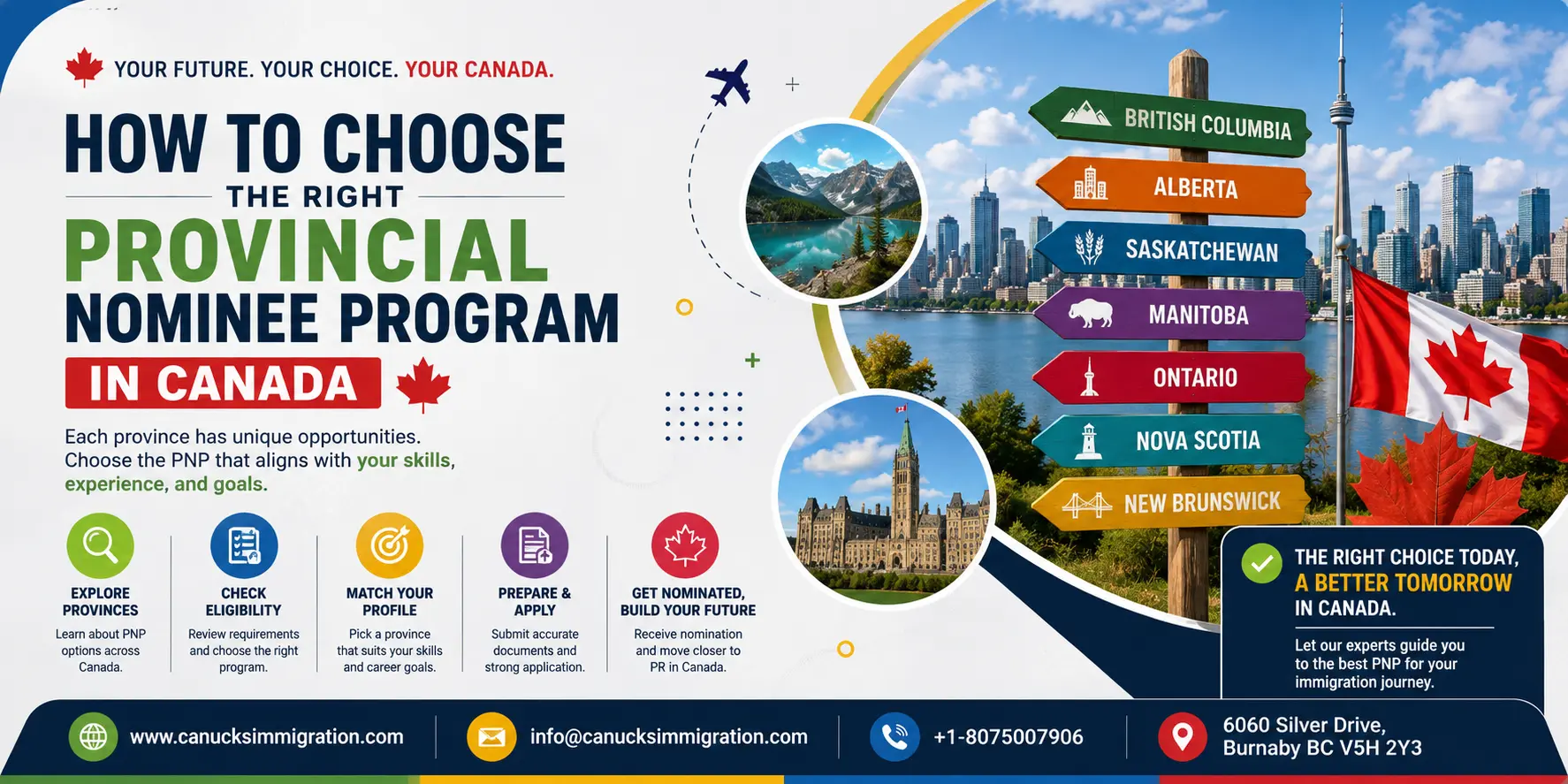
The initial step is to identify the immigration program that suits your situation. Canada's main economic immigration system, Express Entry, manages applications under the Federal Skilled Worker Program, Canadian Experience Class and Federal Skilled Trades Program.
Provincial Nominee Programs, family sponsorship and regional immigration programs are other routes. The age, education, language proficiency, work experience, Canadian associations and other considerations can make the choice of which option is appropriate.
It is also important to know the pathway prior to commencing your application since the eligibility criteria and procedures vary across programs. Reliable Canada immigration services might assist you to compare the available pathways based on your profile.
Step 2: Check the Eligibility Requirements
After determining a possible pathway, read the details of its eligibility. You might require qualifying skilled work experience, approved language test results, educational credentials and settlement funds, depending on the program.
In the case of Express Entry, the applicants will form a profile and place themselves in a pool where they are ranked based on the Comprehensive Ranking System (CRS).
The exact Canada PR requirements depend on the immigration program. Thus, candidates cannot rely on the idea that passing the requirements of one of the pathways is a guarantee of passing the other.
When you are in a complex situation or are unsure of whether to be eligible, a Canadian immigration consultant can assist you in clarifying on the criteria that are to be applied before you waste time and money on an application.
Step 3: Complete Your Language Test and Educational Assessment
Language skills are a significant aspect of numerous economic immigration programs. Applicants might also require an approved English or French language test depending on the pathway.
In case you have completed your education in a country other than Canada, you also might require an Educational Credentials Assessment (ECA) in order to find out how your credentials relate to those of Canada.
Since language outcomes and evaluation might be time consuming, it might be effective to complete these steps before the whole process. Your results should also remain valid when required by your chosen program.
Step 4: Gather Your Supporting Documents
One of the most significant elements of the process is preparation of documentation. Depending on your pathway and personalized document checklist, you may need:
- Valid passport or travel documents
- Language test results
- Educational credentials and ECA
- Employment reference letters
- Police certificates
- Proof of funds, where required
- Civil status documents
- Medical examination results
- Forms and supporting evidence requested by IRCC
IRCC offers a document checklist that is customized to the applicants of the Express Entry program once they have filled in the pertinent online forms.
Applicants must ensure that they carefully verify names, dates, employment history a and other information across documents. Processing may raise questions due to inconsistencies.
Step 5: Create an Express Entry Profile, If Applicable
In case you have chosen the Express Entry as your route, you will have to create an online profile and enter the information about your education, working experience, language skills and other appropriate aspects.
A CRS score is provided to your profile and qualified candidates are added to Express Entry pool. Canada then holds invitation rounds and invites the shortlisted candidates to apply to their permanent residence.
You should update your profile in case of change in your circumstances like getting a new language result, changing jobs or a experiencing a change in family status.
Step 6: Receive an Invitation to Apply
The candidates of Express Entry are not able to make a federal PR application at any time they want to. They must, in general, be invited to apply (ITA) in one of the eligible rounds of invitations.
Once an invitation is received, you may want to take a closer look to the data in your profile and ensure that you still fit the criteria. According to IRCC, invited candidates usually have 60 calendar days to make their application online.
Preparation is especially important with this deadline. You can also save time by preparing your documents ahead of time to minimize the chances of rushing at the final stage.
Step 7: Submit Your Permanent Residence Application
Once ITA is received, fill out the online application and submit the documentation requested. The system gives instructions and a checklist that is personalized and according to your circumstances.
This is the formal stage of your application for Canadian permanent residence. All the forms must be filled correctly and supplementary documents must match the information that you have stated in your application.
When you are following a non-Express Entry route, it may be different. For example, candidates in some of the PNP streams can file their applications using the relevant process once they are issued with a provincial nomination.
If you want to apply for permanent residence Canada using the intricate route, professional Canada immigration services can assist you in arranging the application and determining the possible challenges in documentation.
Step 8: Pay the Required Fees and Give Biometrics
PR applicants usually have to pay the necessary government processing fees and, in certain cases, biometrics fees. The precise sum will be determined by the program and applicant conditions. IRCC offers the fee information that is relevant in the application process.
If biometrics are required, applicants receive instructions explaining when and where to provide fingerprints and a photograph. According to IRCC, the majority of permanent residence applicants now have to submit biometrics, with possible exemptions.
Keep payment receipts and follow the instructions within your application account.
Step 9: Complete Medical and Background Checks
IRCC determines the admissibility of the applicants to Canada. This may include police certificates, background checks, and medical examinations.
Depending on your individual background, and on the countries you have resided in, police certificates might be demanded.
At this point, the applicant is expected to provide prompt responses in case IRCC asks him to furnish more documents, information, or exams. The use of the account to monitor your application can be used to make sure you do not miss important requests.
Step 10: Receive Your PR Confirmation and Prepare for Canada
If your application is approved, you may receive a Confirmation of Permanent Residence (COPR). Applicants outside Canada may also receive a permanent resident visa if one is required for their nationality.
The COPR contains important personal and application information, so check it carefully for errors. If you are outside Canada, you generally need to travel to Canada before the COPR's validity date and present it at the port of entry.
Once you become a permanent resident, the first PR card will be issued to you, once you have provided the necessary Canadian mailing address, as well as a photograph.
Common Mistakes to Avoid
A successful application requires attention to detail. Common problems include:
- Selecting an immigration pathway without checking eligibility
- Providing inconsistent employment or personal information
- Submitting expired language test results
- Missing required documents
- Failing to meet an application deadline
- Forgetting to update important changes in circumstances
- Assuming that requirements are identical across immigration programs
Another added advantage of having reputable Canada immigration services can offer is the added support, especially in cases where you have multiple applicants, complex employment history or special circumstances.
How Canada Immigration Services Can Help
The PR process may include the eligibility checks, documentation, online forms, deadlines and communication with immigration authorities. Canada immigration services can assist those wishing to know the steps to take and find the right channels and arrange the supporting documents.
An application can also be checked by a qualified Canadian immigration consultant to ensure that it is complete and can guide an applicant to know the requirements that apply to their specific pathway. Professional help is not a guarantee but can be used to minimize unnecessary administrative mistakes.
For applicants who want to apply for permanent residency Canada with greater clarity, getting professional advice before submission may be worthwhile.
Conclusion
Applying for Canadian permanent residence is a structured process and starts with the selection of the appropriate immigration pathway and concludes with accepting the PR status. Checking the eligibility and pre-preparation of the documents to a submission of the application and final formalities, each step must be carefully considered.
If you are unsure about your options, Canada immigration services can help you understand the process and prepare according to your circumstances. Spending time checking your eligibility, documents and deadlines can help guide your process of getting permanent residence in an organized and informed manner.